Geographically – grouped meetings:
Seeing the annual fading/ faded as of the past week: high winds aborting the possibility of any remaining rain falling with temperatures still in the 40’s, the Regional picture as the government (Disaster Reduction Management Coordination office) issued on August 19th is grim. Animal body weakness perpetuating a variety of contagious diseases, animal death is now reportedly shocking, even among camels. Under these circumstances, APDA is running behind rather than in front of the problem: today’s reality and the fact rain under El Niño may well not happen until July/ August 2027. Therefore, the organization decided to call on the wisdom of the clan leadership; wanting their direction as to response and possible adaption. Dividing the Region geographically into northern, central and southern, the organization met with 31 clan leaders and local government people on Saturday 29th. This brought together leaders from Eli Da’ar, Kori and Bidu, the 3 – known drought-prone districts; adjoining Teeru and Mabay to the center and northern Dubte where communities are wholly dependent on APDA. These men came eager to participate having been told APDA wanted to listen to them, not that the organization has solutions at hand.
While the concept of El Niño was strange to them, the very recent example of the catastrophe in Nepal and Tibet proved illustrative. For them, this season’s rain was ‘held in the sky’ rather than falling on the ground confusing them as to whether there was a season or not. The men appreciated interacting saying this was a rare moment for them to express their joined ideas. In summary, what they see is that water is needed to live and that animals are the life-blood of the society, ‘without them, Afar are not Afar’ one man said.
On water:
They expressed frustration on various water – well and water scheme attempts citing a drilling attempt in Kori; now a well sunk in Mabay with very low output; the abysmal lack of water supply in Eli Da’ar; the need for maintenance on pipeline extensions; water pumps and poor access to generator fuel and so on. Teeru men explained a massive water scheme pumping for 50 kilometers only to break down and leave the community struggling with traditional wells that, out of 100 wells, in the past 12 years only 5 have water, that water now up to 5 meters into the ground, men climbing man over man to pull the water up. The overall consensus was that, under community leadership, communities will construct rainwater harvesting cisterns, APDA partnering in bringing in cement to render the chambers and roofing to close them. Too they highly favored dug – out ponds (with its second-hand front-wheel loader, APDA has excavated 250,000 meter3 dams that actually become oasis since natural foliage flourishes in the overflow. The best then is to save any rainfall run-off – this water in a cistern lasting up to 5 months and in a dam, up to 8 to 10 months, dependent on the rain, the community excavating as far as is possible, even jointly contributing for cement.
While harvested rainwater is unprotected, most Afar communities even till today have only drunk unprotected water. Water in heat and living the strenuous life they live cannot be questioned, they said – first quenching the thirst and then safety in drinking… This was particularly expressed by the Bidu leaders where constant temperatures of over 40 degrees are current for 8 months annually and current water development only assists around 15% of their overall population in need – they appealed for dams. In Mabay, where development has yet to reach, the leaders described community commitment to road construction stating they have already hand-excavated 45 kilometers of road through particularly foreboding landscape, constructing that a front wheel loader can get in.
On livestock:
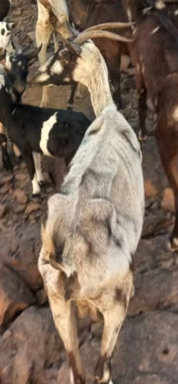
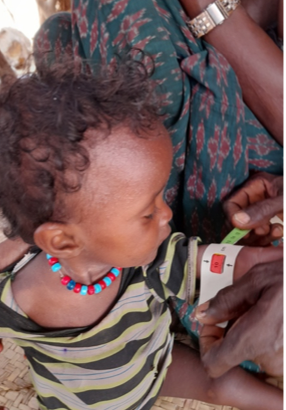
Stating the current rain cannot bring about rejuvenated pasture, the leaders all spoke of what they have recently begun to experience: concentrated animal feed for breeding quotes. They all related with great grief to the household unable to adequately feed the pregnant and lactating mother stating child malnutrition death was certainly now with them. Milk being the only saving source of nutrition, they related well to the explanation that indeed, the Afar society is breeding a generation of intellectually handicapped children, children doomed to low disease immunity, all because the pregnant/ lactating mother did not eat adequate nourishment for the development of brain’s frontal lobe or the immunity system before that child turned 2 years old – APDA told them that the current figure of child growth stunting is 46%. Then, the primary solution for a mobile herding family must be milk – only attained if the animal body condition allows: grazing pasture not adequately nutritious; concentrated animal feed the alternative.
This then is APDA’s dilemma: with the concentrated animal feed production plant to produce adequate feed to rescue all communities in need: the leaders were unilaterally in agreement that they will determine the ability of households to pay a minimum cost-price for the food; those in abject poverty having to be helped out with free animal feed. Again, the same calculated assistance in animal treatment: those who can, paying cost-price of veterinary medicines, APDA having groups of 5 to 20 trained and activated animal treatment workers in 19 districts of the Region is in constant contact to replace their veterinary medications, catching the latest information
On leadership:
The clan leaders expressed marginalization from the mainstream thinking of societal solution requesting APDA to gather them more often, seeing that they have the social cohesion to mobilize the community toward solutions. They all agreed they can and are leading in stopping the community from the wasteful habit of chewing the amphetamine leaf, Khaat. Again, they described forest protection as in their portfolio.
Next meetings:
APDA will repeat this central zone meeting with the northern clan leadership as well the southern leaders in the coming 10 days, equally listening to them for their determined answers and input that at best, we are not looking at difficulties to come with a blank page.
Achievements in emergency support since the previous July 15th update:
- Water trucking through fueling available tankers (initially 3 from the government and one from APDA)
Rain did fall for roadside communities where APDA was assisting water trucking for 50,000 people. Reducing this now to 2 fueled trucks, still 20,000 people are getting 5 liters each per day: 5 kebeles in Bidu, nearby Ta’asuli and Gulble Af. The rain that fell is expected to last around 3 weeks as drinking water.
In Buure, northern Eli Da’ar where rain is yet to fall, there is one solarized borehole assisting 56,000 people (4 sub-districts). With only daylight pumping, it was not able to supply this vast number. Therefore, APDA sends fuel to work the generator at night here and in Esseylu, just 42 kilometers south of Buure.
- Animal feed:
In the intervening 6 weeks, 644 households in dire distress were assisted to feed 5 milking goats each for 30 days. This for APDA is a low achievement affected by transportation costs to their very remote sites as well that initially, maize as an ingredient of the animal feed was not available. This was given parallelly with animal treatment as well as responding to animal disease outbreaks in over 6 areas.
- Malnutrition response:
As was expected, by July, the number of malnourished mothers had soared to almost 12,000, the worst in Afdeera and Buurimudayto with 63% and 72% of mothers affected respectively. Due to the overall country demand for the supplementary food, ground barley was not available from the producers till now. Health teams responded in a total of 15 districts and areas walking through the communities to screen them. The organization is using the strategy of animal feed to respond in that malnutrition in the household along with less than 10 remaining goats are criteria to the distribution of concentrated feed.
Where APDA needs acceleration:
Currently has 820 quintals in store with a plan to send out to 8 districts, averaging 80 quintals per needy district and from these populations, 0 to 20% of that community only able to pay cost price for the feed now facing the severity of the animal condition. Animal medications will go out alongside this. Actual distribution will take up to 3 weeks to complete, trucks going out daily. The feed given will last the herdsmen for 1 month only. This plan is highly prioritized leaving out some communities already showing need to be included.
In anticipation of support, APDA is now planting maize and alfalfa (lucerne) to be harvested in 3 and 2 months respectively as the base of a further 1,500 quintals of concentrated animal feed production. From this plan, there is a 2 – month gap between support on the ground and the available produced feed. The other challenge is the APDA truck fleet, fuel and maintenance costs on the less – than track – qualified roads.
Currently, as per the current plan, APDA will continue fueling water well generators and water trucks through September. This is conditional to the communities who are now drinking rainwater not requiring help.
As of August, APDA is very limited in funding to reach these hungry households with nutrition screening and disease prevention. A further 2 child-vaccination campaigns are planned but there is high anxiety as to how to continue treating severe acute malnutrition in the 15 districts/ areas APDA is committed to support.
Youth and marketable employment The organization continues to work hard on livelihood rehabilitation for specific communities now spotted across the Regional map. As of August 2025, a total of 150 people are productively farming on land that was commercially used on the lower Awash (70 women included); 207 formerly herdsmen are engaged in fishing close to the Djibouti border (20 women benefit by cleaning and freezing the fish); a further 202 otherwise unemployed women are now into petty trade in these 2 districts and 58 women are selling milk in Logya town while another 25 women have taken up washable menstruation pad production. Between the towns of Barhale, Aba’ala and Assayita, 150 youth are supported in petty trade while a further 150 youth (50% females) are trained in their choice of trade to establish a business ranging from hair – styling; tailoring; bakery and phone repairs. This along with the 66 – odd cooperatives connected to APDA in rural sites and a further 24 food crop – growing sites of 5 to 50 hectares form spots on the map that are rippling out their productivity benefit despite the harsh conditions. Eventually, as these dots join, then productivity is assured
The dilemma: not good for eating and not good for selling
It is for us to determine Hasna’s future
The dilemma: not good for eating and not good for selling
Postscript: the situation at the borders regarding conflict threat remains as tense, particularly on the Tigray/ Afar border, army encampments remain at ready. The Issa/ Somali insurgents are making incursions to raid animals from the Djibouti side.
