Food insecurity – malnutrition
Having received well below average rain in 2025, herding communities are now reporting animal diseases with early signs of herd deaths. As of late 2023 till now, there has been extensive animal deaths: from diseases associated with the poor body condition of the goats; having difficulty to find water for their animals as well as being separated from their animals under the pressure of military movements. This then have greatly reduced the selling power of the family to buy market food when there is no milk and conversely, the number of goats they must sell for 50 kilograms of flour is rising. Particularly for the Eli Da’ar border community who have lived between the 2 national armies since 2025, life has been repressive: movement restricted; water often not readily accessible; the market now as far away as 250 kilometers to Logya/ Samara while they simply do not have the animals to sell to exchange for the wheat flour they want to buy to eat. This is now strongly evident in malnutrition, the February rapid nutrition screening showing 46% of all pregnant and breast-feeding mothers in the 5 kebeles under this isolation with malnutrition along with their children. Further along the border in northern Afdeera, the situation is similar as well as in 7 other districts that APDA screened in the month, Kilaalu south of Mille, a district having almost no service infrastructure having as high as 61% maternal malnutrition. This indeed all calls for urgency as follows:
With wholehearted gratitude to those who had supported in January, APDA has recently acquired support as follows and is in the process of moving it out to highest need:
- Three food types (wheat flour, chick pea flour and cooking oil) for 2,500 + 131 people for 2 months selected from the most effected
- Organization social enterprise – produced concentrated animal feed supporting 2,667 households to keep 5 milking goats in good condition for the coming 2 critical months along with veterinary medications.
- Supplementary food for 333 malnourished pregnant and early breast-feeding mothers.
The Bureau of Health continues to supply APDA with treatment food for under 5-year-old malnourished children, a substance commonly known as ‘plumpy nut’. APDA health workers walk through the communities determining the nutrition status using middle upper arm circumference and treating those identified as malnourished immediately. As is very apparent, more assistance is needed in all the mentioned sectors.
As is our earnest desire, APDA also tries to get the communities away from assistance to their own self-reliance as much as is practical so, as was so successful in 2025, the organization sells concentrated animal feed to herdsmen who can afford that their animals are protected from drought – deterioration, the community paying production cost, APDA transporting it to them. Further enabling this strategy will wake up the communities’ innate coping mechanisms to assist one another and to resist the effects of long dry seasons.
The governments of Kori and Bidu, the two driest districts that endure thirst above all else are asking APDA to support them in fuel for their water tankers costing 12,045 USD for two trucks running daily for 1 month immediately. This will rescue communities who in the now increasing heat are walking upwards of 12 hours to collect water and indeed, there is the likelihood that people, especially children could die of thirst.
Expected rain
As the cool of winter has all but left us, the skies are now veiled with a thin cloud coverage at night into the early morning. There is a forecast for rain as of later into March and into April described as ‘light rain in parts’. This however, while solving immediate thirst people are now enduring if the rivers coming off the Highlands bring water and traditional wells replenish, the awful current specter of hunger and malnutrition that has so strongly worsened will not easily find solution
New government guidelines for NGOs in Ethiopia
As of late February, the Federal Disaster Risk Management Commission release a 4 – point declaration toward communities in the country graduating to resilience rather than following along with need and then dependency on assistance. This puts much more emphasis on the government taking the lead in emergencies and requires that as NGOs, the approach is to seek out the respective communities’ response and solution to their own problem. For us in Afar, this is indeed the direction we are trying to take and want to but there is much more to be done to reach communities with poor to no access as well particularly to support sustainability the herding livelihood in light of droughts. For more of the way APDA is thinking and acting strategically, you are most welcome to read up on our webpage www.apda-afar.org.
Easing the psychological pain of displacement and losses among women
As in Yanguddi and Sibaybi southern Afar, many women have sat in displacement for now 2 years, their husbands having died in battles or still defending in frontlines, they left to support their respective families with meager goat herds. They must make daily decisions to raise their children single-handed depending on very occasional aid. Again, almost imprisoned in their households, these women are from their view, disabled, ‘nothing, aside from waiting to do’. Their normal daily employment is weaving mats and working with the dry leaf of the doma palm. Thus, APDA is planning how to generate the availability of this raw material and support them in marketing their produce.
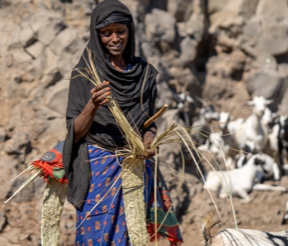
Here, the woman herding is weaving as she walks. This for them is as normal as crocheting and knitting for women in other countries. From this they make mats to cover houses as well as very beautiful household containers that they decorate with beads.
Growing food in utterly surprising placesGrowing food in utterly surprising places
Almost 40 kilometers from Ert’Ale the active volcano in the ‘hottest inhabited place on Earth’ as per the 2005 National Geographic, from the water of a borehole in Yalli Bahe, Afdeera food crops are being irrigated.
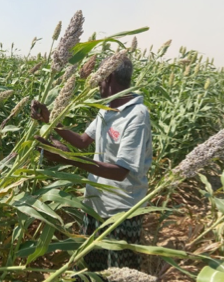
Pearl Millet, a particularly drought – resistant, high protein crop growing with minimum water and maturing in 70 days
APDA now has these patches of green, nutritional production in 24 community sites that had never grown crops before. These newly adjusted agro-pastoralists are first feeding their families as well as selling into their respective local communities leading to diet diversity that is so earnestly needed
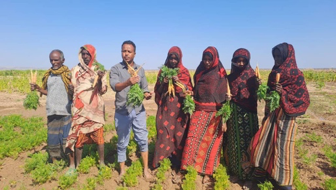
These women have grown carrots for the first time ever in another such plot 15 kilometers from Samara.
In other news, APDA’s Barbara May Maternity Hospital is preparing to support sick premature and babies requiring breathing support having installed a CPAP machine as the beginning of a newborn care unit.
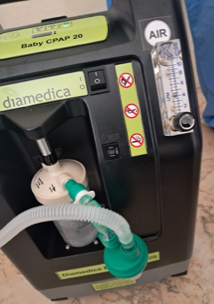
This pushes oxygenated air through prongs in the baby’s nose enabling the inflation of the lungs and supporting over the initial 48 to 72 hours when the baby is overcoming any birthing inhalation. This then avoids separating mother from babe – referring the baby 90 kilometers away for such treatment while the mother recovers in the Mille hospital. Four staff are currently trained to run the unit.
